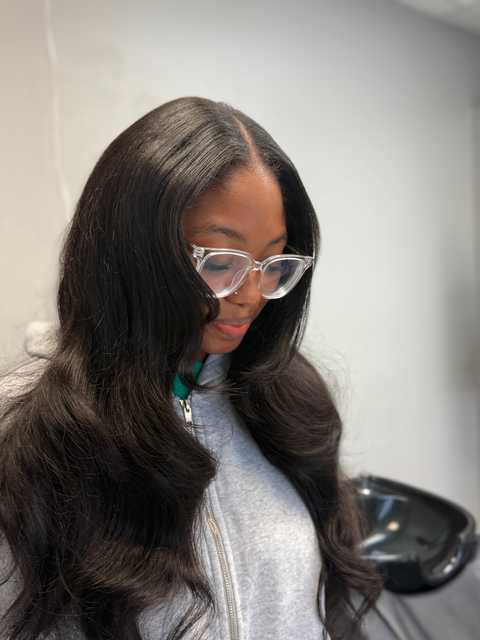

Closure Sew-In or Leave-Out: Which Covers More Natural Hair?
By Victory Hair LLC | November 17, 2026
Serving Omaha, Ralston, Irvington, Boys Town, Bennington, and Elkhorn
If you want a polished look without fighting your hair every morning, you’re in the right place. I hear “she made me feel comfortable” all the time, and that matters because choosing between a closure sew-in and a leave-out is personal. Here’s the quick answer: a closure sew-in covers only a small section of your natural hair (usually a 4x4 or 5x5 area at the crown or part), while a leave-out shows more of your own hair along the hairline and part. In Omaha’s four-season weather, that difference can mean less daily heat, less edge stress, and a lot less styling time.
Natural hair coverage isn’t vanity, it’s daily styling time
Most people searching “sew in extensions” aren’t stuck on a service name. You’re trying to answer a real question: “How much of my hair is going to be out?” Because that’s the part that takes the most work, and it’s the part that’s most likely to break if it’s getting heat, friction, and dryness on repeat.
In Omaha, winter hats and hoods can rub your edges raw if you’re already tender there. And summer humidity can turn blending into a whole project. If you’re a busy commuter, a parent, or you just want your hair to look done without touching a flat iron every day, coverage matters. A little more coverage can mean less manipulation. Less manipulation usually means better retention.
Quick reality check: If you choose leave-out, you’re choosing daily blending. If you choose a closure, you’re choosing less of your hair being exposed.
Closure vs leave-out coverage: the exact difference (4x4, 5x5, and your edges)
A closure sew-in is built around a closure piece, most commonly 4x4 or 5x5. That number is the lace area. It usually sits at the crown and part area, so it covers that small section of scalp that would normally be your leave-out. Your natural hair is still braided underneath, and the closure gives you a clean part without you having to straighten or blend a lot of your own hair.
A leave-out sew-in intentionally keeps out a section of your real hair, often along the perimeter and part. That means more natural hair is visible. The blend can look very “you” when it’s done right, but it also means your leave-out takes the weather personally. It’s the part that frizzes in humidity, gets dry in winter, and ends up needing more heat to match the extensions.
Why closures help when you’re worried about breakage
Closures don’t automatically “fix” edges, but they do reduce how much you have to touch them. Less brushing, less pressing, less pulling. That’s why a closure is often the calmer option if your hairline is fine, fragile, or you wear hats a lot in the winter. And if you’re tender-headed, a closure can also feel easier day to day because you’re not constantly trying to make your leave-out behave.
“Thank you so much for helping me with my new start. You are amazing.”
one of our first-time visitors
If Omaha winter is rough on your edges, do this with your sew-in
A sew-in can be a protective style, but your results come down to what you do between appointments. Four-season weather means your hair needs different support depending on the month. Here’s what I walk my clients through, especially in Benson Gardens and the Maple Village area where people are in and out of the car, in and out of the cold, and living in hats.
My go-to maintenance habits for closures and leave-out
- Nightly silk wrap or scarf: it cuts down friction, especially if you’re wearing beanies and hoods the next day.
- Seal your perimeter: a light oil or butter on the edges helps with winter dryness. Keep it light so you’re not building up around the hairline.
- Blend gently: if you’re doing leave-out, keep heat low and use heat protectant. The goal is “match the texture, ” not “flatten your hair into submission.”
- Don’t ignore the scalp: keep your parts clean and don’t drown the braids in product. A little goes a long way.
And yes, convenience matters. I’m used to seeing clients coming in from Maple Road, 72nd Street, and I-680, so I keep the appointment flow efficient. Closure sew-in appointments are booked at 240 minutes so we’re not rushing the braid down, closure placement, or finishing work.
Who I steer toward a closure sew-in, and who I steer away
A closure sew-in is usually your best bet if you want less daily styling, you’re concerned about edge breakage, or you want your part to stay neat without pressing your hair nonstop. It’s also a great option if you wear hats often in the winter and you don’t want the hairline friction that comes with constant blending.
I’ll often recommend leave-out if you love showing more of your natural hair and you don’t mind styling it regularly. If you want full hairline coverage, a frontal or a wig install may make more sense than either option. If you’re not sure, we’ll talk it out before we commit to anything.
Heads up on timing: Bring your closure or frontal 24 to 48 hours before your appointment so I can customize it properly.
Why Omaha clients keep coming back for sew in extensions (and what to do next)
People come to me because they want hair that looks like them, just better put together. I’m big on listening first. More than one person has mentioned they were able to describe what they wanted and loved the results. That’s the goal every time. And if you’re tender-headed, you’re not alone. I keep my hands gentle and I don’t believe in “beauty is pain” installs.
“My quick weaves/sewin always comes out looking super natural and the style lasts.”
one of our regulars
If you’re comparing options, these other reads help you decide without getting overwhelmed: our Sew-Ins, Quick Weaves & Wig Installations overview, sew-in options for Benson and Maple, and a practical guide to sew-ins and quick weaves.
Ready for a consult? Tell me how much of your natural hair you want showing, how you normally style day to day, and what Nebraska weather does to your edges. I’ll recommend closure, leave-out, frontal, or wig based on that, not based on a trend.
Visit us at 14202 PIERCE PLAZA, 14202 PIERCE PLAZA, Omaha, NE 68144 | Call: +14023125751 | Email: victoryhairzoek@gmail.com
Closure sew-in FAQs I get in the chair
How much natural hair does a closure sew-in cover?
A closure covers a small section of your natural hair at the crown or part, usually a 4x4 or 5x5 lace area. Your braids are underneath, and the closure gives you the part so you don’t have to leave out as much of your own hair.
Is a closure sew-in better for protecting my edges than leaving out my hair?
Usually, yes, because less of your natural hair is exposed and you’re doing less daily blending. That means less heat and less brushing at the hairline. It still matters that the install is comfortable and not too tight, and that you’re protecting your perimeter at home with a silk wrap and light moisture.
Can I style my leave-out with a closure sew-in (heat, braids, ponytails)?
If you choose a closure sew-in, you typically have very little leave-out around the part area, so styling is more about the extensions than your natural hair. If you do have any leave-out, keep heat low and always use heat protectant. For sleek ponytails and bigger styling freedom at the hairline, we’ll talk about a frontal or a wig install instead.
How long should I expect a closure sew-in to last with normal wear?
Longevity depends on your lifestyle and home care, but many people get around 4 weeks with good maintenance. I’ve had clients specifically mention their sew-in lasted over 4 weeks. Sleeping with a silk wrap, keeping product buildup light, and not picking at the closure area helps a lot.
Will a closure sew-in look natural if I have thin edges or a sparse hairline?
It can, because a closure shifts attention to a clean part area instead of asking your edges to do all the work. If your goal is full hairline coverage, a frontal or wig install is usually the better match. Bring your closure 24 to 48 hours early so I can customize it for the most natural finish.
What do you mean by “sew in”?
A sew in is an install where your natural hair is braided down and we sew the extension wefts onto the braids. The top is finished with either leave-out (your real hair blended over the top) or a closure/frontal piece for coverage and a defined part.
Do curly sew in extensions work with a closure?
Yes. Curly sew in extensions pair really well with a closure because you don’t have to fight your natural leave-out to match the curl pattern. I’ll help you choose a closure and curls that blend with your look and your daily routine.
What counts as good sew in hair?
Good sew in hair holds up to regular styling without matting easily, blends well with the finish you want, and doesn’t shed excessively. If you’re bringing your own bundles, I’ll look at your goals and help you pick something that makes sense for the style you want to wear most days.
Are curly hair sew in extensions higher maintenance?
They can be, mostly because curls need consistent moisture and gentle detangling to keep the pattern looking fresh. The upside is curly installs often hide blending lines better, so you may do less heat styling on your natural hair, which is a win for retention.